
Discover the World Beyond Glasses & Contacts
The LASIK Difference
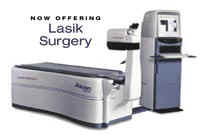 For over 25 years doctors placed incisions in the cornea to treat nearsightedness, farsightedness, and astigmatism. In the early 1980’s, they began looking at lasers to improve the precision and predictability of altering the shape of the cornea. Researchers found that the Excimer laser could remove tissue with up to 0.25 microns of accuracy. Now, in its second decade of use, the technologically advanced Excimer laser has added a tremendous amount of precision, control and safety to the surgical correction of vision errors. Using this remarkable technology, the cornea is reshaped to conform to your glasses or contact lens prescription, thereby reducing or even eliminating a lifetime of dependence on corrective lenses for hundreds of thousands of Americans every year.
LASIK, or Laser in-Situ Keratomileusis offers a number of benefits over other forms of laser vision correction because it is performed under a protective layer of corneal tissue. As a result, there is less surface area to heal, less risk of scarring, less risk of corneal haze, less postoperative discomfort, less postoperative need for medications, and vision returns more rapidly, often within a day or so. LASIK can also treat a higher range of vision errors. Although postoperative results vary, most patients are able to pass a driver’s license test without their glasses or contact lenses.
The Procedure
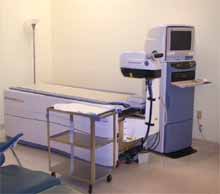 After your eye has been completely numbed using “eye drop” anesthesia, an eyelid holder will be placed between your eyelids to prevent you from blinking.
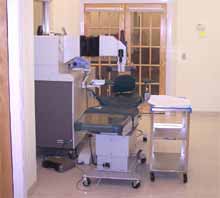
Next, an instrument known as a microkeratome makes a protective flap in the cornea. During this process you may feel a little pressure, but no discomfort. You will be asked to look directly at a target light while the laser reshapes the cornea, usually in less than a minute. Then, the protective flap is folded back in place where it bonds securely without the need for stitches.
After LASIK, some patients report a slight discomfort that usually goes away within twelve to twenty-four hours.
 Myopia
(Nearsightedness)
Myopia or nearsightedness occurs when light rays are focused in front of the retina instead of directly on the retina.
Hyperopia
(Farsightedness)
Hyperopia or farsightedness occurs when light rays are not bent enough to focus on the retina.
Astigmatism
Regular astigmatism occurs when light rays are focused at more thane one point on the retina.
LASIK
(Laser in-Situ Keratomileusis)
The Excimer laser removes microscopic layers of corneal tissue to change its shape, allowing light rays to focus more directly on the retina.
How it Works
LASIK/Nearsightedness
To treat nearsightedness, the cornea must be made flatter. This is accomplished by removing tissue from the center of the cornea.
LASIK/Farsightedness
To treat farsightedness, the central cornea must be made steeper. This is accomplished by directing the laser beam to remove tissue from around this area.
LASIK/Astigmatism
To treat astigmatism, the cornea must be made more spherical. By changing the pattern of the beam, tissue is removed in one direction more than the other.
Are You A Candidate For LASIK
The Ideal Candidate
In general, the ideal candidate for LASIK is over 18 years of age and has healthy corneas. Candidates must not have had a significant increase in their prescription in the last 12 months. People with certain medical conditions or women who are pregnant may not be good candidates for LASIK.
Realistic Expectations
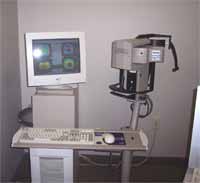 The decision to have LASIK is an important one that ultimately, only you man make. It is important that you have realistic expectations and that your decision is based on facts, not hopes or misconceptions. The goal of LASIK is to reduce your dependence on corrective lenses. LASIK does not always create 20/20 or even 20/40 vision. It cannot correct a condition known as presbyopia, or aging of the eye. This normally occurs around age 40 and may require the use of reading glasses. In fact, people over 40 who have their distance vision improved with LASIK, may find they need reading glasses after the procedure. Your doctor will provide you with additional information that will allow you to make an informed decision.
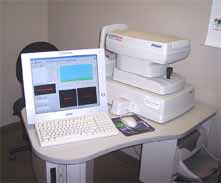 In The Blink Of An Eye
It takes only seconds to treat a lifetime of nearsightedness, farsightedness and astigmatism.
Find out if you are a candidate for this life changing procedure by calling your eye doctor to schedule a personal consultation. Should your vision fall within the range of correction for LASIK, more comprehensive tests may be necessary.
If you are interested in LASIK procedure or just have questions concerning LASIK eye surgery please feel free to call our offices in The Villages at the following numbers:
We also have free LASIK screenings at the Lange Eye Institute in The Villages. Call 352 753-4014 for an appointment.